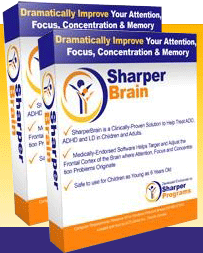
SharperBrain and SharperMemory have been developed by clinicians at the Advanced Cognitive Enhancement (ACE) clinic in Toronto, Canada.
The programs have been extensively tested with many individuals suffering from attention deficit, memory impairment, concentration, as well as other cognitive impairments.
Developed by professionals and supported by numerous case studies and follow-ups, SharperBrain and
SharperMemory are the only complete software programs available to help restore and repair normal
brain function in children and adults suffering from:
* Attention-Deficit Disorder (ADD) or
Attention-Deficit Hyperactivity Disorder (ADHD)
* Learning Disability (LD)
* Memory Impairment due to Aging, Stroke, MCI or Head/Brain Injury
SharperMemory does not just help improve poor memory, in fact, it improves all aspects of learning and information processing
|


 We have been serving customers from for over 23 years